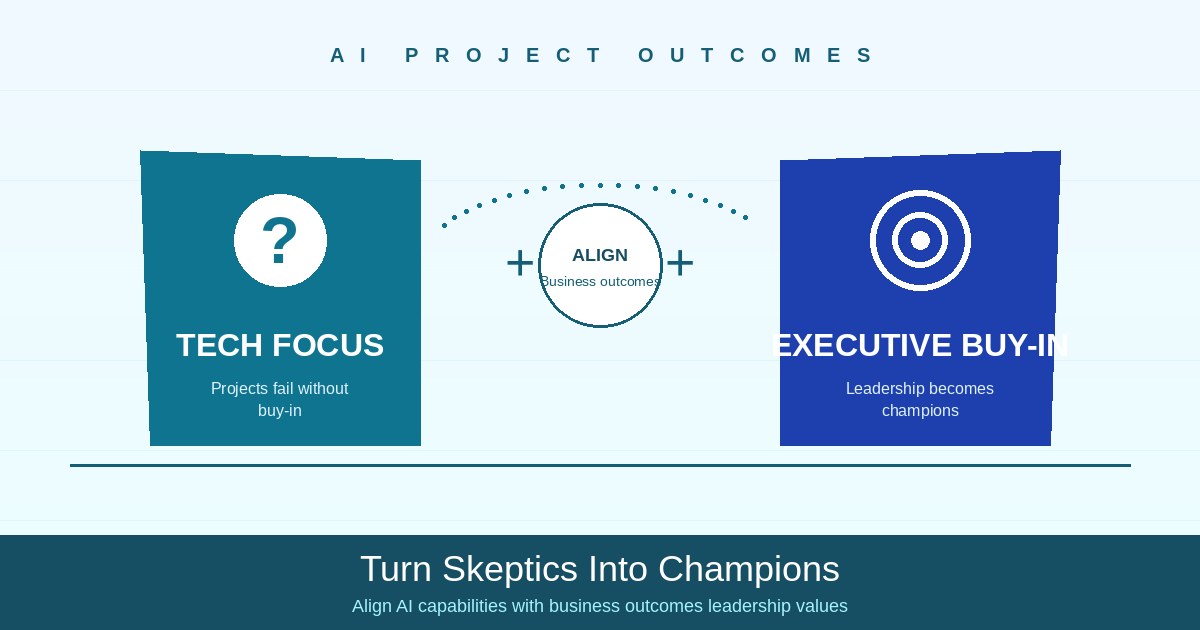
You’ve done the research, identified the perfect AI use case, and built a compelling business case. But when you present to leadership, you get polite nods and a “we’ll think about it” that stretches into months. Sound familiar?
How do you get executive buy-in for AI projects?
Lead with business outcomestrategic priorities, not technology or technical capabilities. Executives think in terms of competitive advantage and risk management, not algorithms. Address three layers: strategic alignment (connect AI to existing priorities), risk mitigation (be honest about challenges and mitigation plans), and competitive context (what happens if we don’t adopt).
Executive buy-in is the make-or-break factor for AI project success. Without leadership alignment, even the most technically sound AI initiatives stall, get defunded, or launch without the organizational support they need to succeed. This is a critical component of your AI adoption playbook that’s often overlooked.
Why Most AI Pitches Miss the Mark With Executives
Most teams approach executive buy-in backwards. They lead with the technology, dive into technical capabilities, and hope leadership gets excited about the possibilities.
Executives don’t think in terms of “AI projects.” They think in terms of business outcomes, competitive advantage, and risk management. When you start with algorithms and models, you’re speaking a language they don’t need to understand.
The other common mistake? Overpromising on what AI can deliver. Leadership has heard plenty of technology promises before. They’re more impressed by realistic projections backed by clear reasoning than by moonshot claims.
The Trust Gap
Many executives carry skepticism about AI — and often for good reason. They’ve seen technology initiatives fail, go over budget, or create more problems than they solve.
This skepticism isn’t a barrier to overcome; it’s valuable input to incorporate. Executives who ask tough questions about AI implementation are helping you build a stronger project.
Why do AI projects fail without executive sponsorship?
Without clear executive alignment, AI initiatives lack the sustained funding, cross-functional organizational support, and decision-making authority necessary for real success. When executives aren’t genuinely convinced of the business connection to their priorities, projects quietly lose momentum and eventually stall even after promising starts.
Before diving into your AI pitch, understand the questions running through executive minds. These aren’t usually about technical specifications.
“How does this connect to our strategic priorities?” Leadership wants to see clear lines between your AI project and existing business goals. If you can’t draw that connection clearly, neither can they.
“What happens if this doesn’t work?” Executives think about downside risk constantly. They need to understand not just the upside potential, but what failure looks like and how you’ll handle it.
“How will this affect our people?” The human impact of AI isn’t just an HR consideration — it’s a business consideration. Leadership needs to understand how AI will augment their teams, not replace them.
The Resource Reality Check
“What will this actually require from us?” goes beyond budget. Executives want to understand the time commitment, personnel needs, and organizational attention your AI project demands.
Be specific about what you need from leadership, not just what you need for the project. Executive buy-in often fails because leaders don’t understand their ongoing role in AI success.
The Three-Layer Strategy for Building Executive Support
Successful executive buy-in happens in layers, not in a single presentation. Think of it as building alignment over time rather than winning approval in one meeting.
Layer 1: Strategic Alignment
Start by connecting your AI project to problems leadership already recognizes. Don’t introduce new problems to solve — amplify existing priorities.
If customer service response time is a known issue, show how AI can help your team handle inquiries faster. If data analysis bottlenecks are slowing decisions, demonstrate how AI can augment your analysts’ capabilities.
Frame AI as a strategic enabler, not a strategic initiative. The strategy is improving customer service or accelerating decision-making. AI is how you execute that strategy.
Layer 2: Risk Mitigation
Address the elephant in the room: what could go wrong, and how you’ll handle it. This isn’t pessimism — it’s the kind of thinking executives do naturally.
Be honest about implementation challenges, timeline risks, and resource requirements. Show that you’ve thought through these issues and have mitigation plans.
Most importantly, explain how you’ll measure progress and make adjustments. Executives are more comfortable with uncertain outcomes when they trust the process for managing that uncertainty.
What do executives actually need to hear about AI?
Three things: a clear link to existing business strategy and competitive advantage (not vague technology promises), an honest assessment of downside risk and implementation challenges, and a specific picture of their ongoing role in making it work. Use business-impact language — customer satisfaction, decision velocity — not technical progress metrics.
“What happens if we don’t do this?” is often more compelling than “What happens if we do?” Help leadership understand the competitive implications of AI adoption — and AI inaction.
This isn’t about keeping up with trends. It’s about maintaining competitive advantage in a landscape where AI capabilities are becoming table stakes in many industries.
Common Objections and How to Address Them
Even with strong alignment, you’ll face predictable objections. The key is addressing these directly rather than hoping they don’t come up.
“We’re not ready for AI yet”
This often means “We don’t understand how AI fits into our current operations.” The solution isn’t to argue that you are ready — it’s to show how your approach accounts for your current state.
Explain how your AI project builds on existing capabilities rather than requiring wholesale changes. Show the bridge between where you are now and where AI can take you.
“What about job displacement?”
Address this head-on by showing how AI augments human expertise rather than replacing it. Use specific examples of how team members will work alongside AI tools to achieve better outcomes.
The most compelling response is often to involve the affected team members in the conversation. When employees advocate for AI tools that make their work more effective, executive concerns about displacement fade.
“The ROI timeline seems long”
Break down value creation into phases. Show early wins that justify continued investment while building toward larger long-term benefits.
Most executives are comfortable with longer payback periods when they can see progress milestones along the way. Uncertainty about timeline is worse than a longer timeline with clear markers.
Maintaining Executive Support Beyond Initial Approval
Getting initial buy-in is just the beginning. Sustained executive support requires ongoing communication and demonstration of progress.
Regular updates should focus on business impact, not technical progress. Leadership cares more about improved customer satisfaction scores than about model accuracy improvements.
Be proactive about course corrections. When you hit obstacles or need to adjust timelines, bring leadership into the decision-making process rather than trying to solve everything internally first.
Creating Executive Champions
The strongest executive buy-in comes when leadership becomes advocates for your AI initiative. This happens when they see direct connection between AI outcomes and their own success metrics.
Help executives understand how to talk about your AI project with their peers, board members, or other stakeholders. Give them the language and examples they need to become effective champions.
Executive buy-in for AI isn’t about convincing skeptics to love technology. It’s about showing how AI amplifies the business judgment and strategic thinking that got them to leadership positions in the first place. When executives see AI as a partner to their expertise rather than a replacement for their decision-making, support becomes sustainable and authentic.
Related reading: