Your AI pilot just delivered impressive results. Customer service response times dropped by 40%, or your sales team is closing deals 25% faster with AI-powered insights. Now leadership wants to know: how do we roll this out everywhere?
How do you scale AI adoption after a first success?
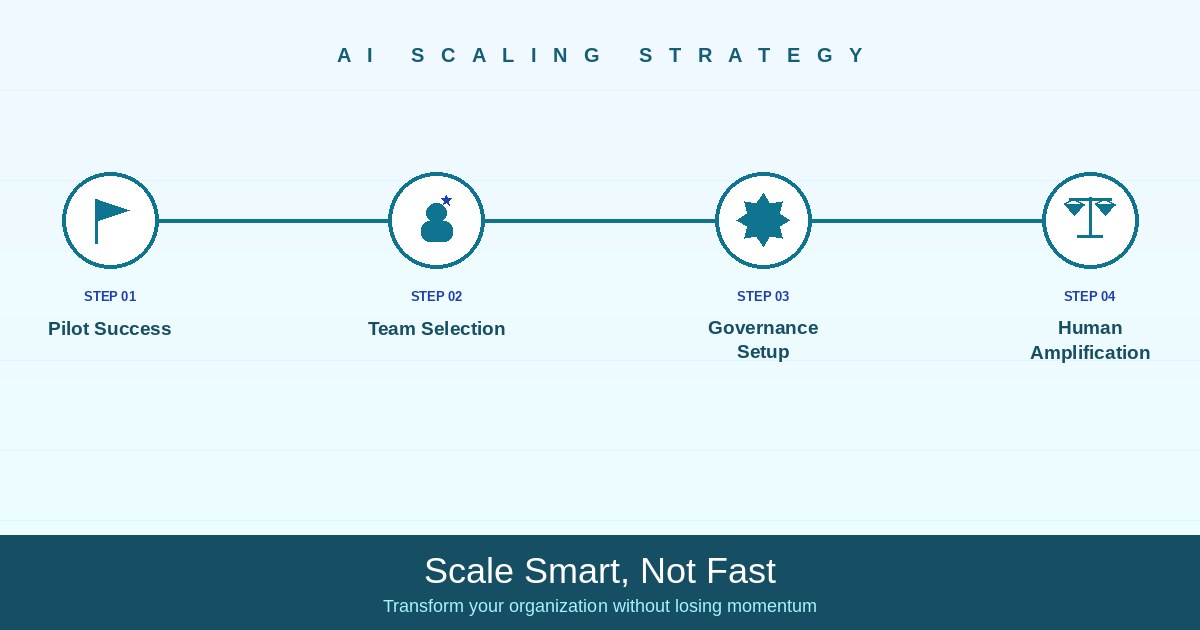
Wait 30-60 days of consistent pilot results before scaling. Choose next teams based on shared characteristics with the successful pilot, clear processes, change-ready culture, strong leadership, not just potential impact. Document everything that worked in a scaling playbook: timeline, objections, metrics, technical requirements.
The path from successful AI pilot to organization-wide adoption requires strategic planning, careful team selection, and a deep understanding of how different departments work. This is where your AI adoption playbook comes into play. Rushing this phase is where most companies stumble, turning early wins into costly mistakes.
What goes wrong when you scale AI too fast?
Rushing to scale without careful change management creates organizational resistance that can set back AI adoption by months or years. Simply copying a successful pilot to different teams with fundamentally different workflows, distinct pain points, and varying technical comfort levels without thoughtful customization is guaranteed to disappoint and undermine momentum.
The other common mistake? Treating scaling as purely a technical challenge. The real barriers to successful AI adoption are human: resistance to change, fear of job displacement, and lack of clear processes for working alongside AI.
Choosing Your Next Teams Strategically
Look for Natural Allies
Your second and third AI implementations should target teams that share characteristics with your successful pilot. If customer service succeeded because they had clear, repetitive processes and a manager who championed the project, look for similar conditions elsewhere.
Don’t pick teams based solely on potential impact. A department that could save millions with AI won’t deliver results if they’re resistant to change or lack leadership support.
Consider Cross-Team Dependencies
Sometimes the best next step isn’t a completely separate department, but teams that work closely with your pilot group. If customer service is now processing tickets faster, maybe it’s time to help the product team better analyze that feedback.
These connected implementations often show results faster because the teams already see AI’s value through their interactions with the pilot group.
Building Your Scaling Framework
Document Everything That Worked
Before you scale anything, capture the lessons from your pilot in detail. What processes did you establish? How did you handle resistance? What training was most effective?
Create a scaling playbook that includes:
- Step-by-step implementation timeline
- Common objections and how to address them
- Success metrics that matter to different stakeholders
- Technical requirements and integration points
Establish Governance Early
As AI spreads across your organization, you need consistent standards for data handling, security, and decision-making. Establish these governance frameworks before you have five different teams implementing AI in five different ways.
This isn’t about creating bureaucracy. It’s about ensuring your AI implementations can work together and share insights across departments.
Managing the Human Side of Scaling
Address the “Am I Next?” Question
When AI succeeds in one department, employees in other areas start wondering if their jobs are at risk. Be proactive about communicating your “Partnership, Not Replacement” philosophy.
Share specific examples of how AI augmented rather than replaced roles in your pilot. Show how customer service reps became more strategic problem-solvers, or how salespeople could focus on relationship-building instead of data entry.
Invest in Change Champions
Identify potential champions in each target department before you begin implementation. These are people who are naturally curious about technology and have influence with their peers.
Invest time in showing them your pilot’s success firsthand. Let them talk to employees whose jobs were enhanced by AI. Well-informed champions are worth more than any executive mandate.
Plan for Different Adoption Curves
Not every team will embrace AI at the same pace. Plan for this reality by creating different levels of involvement. Some people will want to dive deep into AI capabilities, while others just need to understand how to work alongside automated processes.
Design your training and support programs to meet people where they are, not where you think they should be.
Avoiding the Scaling Pitfalls
Don’t Rush the Timeline
The pressure to show quick wins across multiple departments is real, but sustainable AI adoption takes time. Each new implementation needs proper discovery, customization, and change management.
A rushed rollout that fails will set back your AI adoption efforts by months or even years. Better to scale thoughtfully than to scale fast.
Maintain Connection to Business Outcomes
As you expand AI across departments, it’s easy to get caught up in the technology and lose sight of business impact. Each new implementation should tie directly to measurable outcomes that matter to that specific team.
Marketing might care about lead quality, while operations focuses on efficiency gains. Customize your success metrics to what each department values most.
Keep Learning from Each Implementation
Every new AI deployment teaches you something about your organization’s readiness, processes, and culture. Capture these lessons and feed them back into your scaling playbook.
Maybe you discover that remote teams need different training approaches, or that certain types of processes require more change management support. Treat each scaling step as a learning opportunity that improves your next implementation.
How do you turn one AI win into organizational momentum?
Document what worked in a reusable playbook. Pick the next teams whose work resembles the pilot, establish governance before scaling, and address “am I next?” anxiety directly with real success stories. Build department-specific champions through firsthand pilot exposure, and treat each rollout as capability-building, not just technology distribution.
Successful AI scaling isn’t about reaching some finish line where every process is automated. It’s about building an organization that can continuously identify opportunities to amplify human expertise with AI and implement those solutions effectively.
This means developing internal capabilities for recognizing AI opportunities, managing change, and measuring impact. As you scale, you’re not just deploying more AI tools — you’re building organizational muscles for ongoing digital transformation.
The companies that succeed with AI long-term are those that view scaling as a capability-building exercise, not just a technology rollout. They invest in people, processes, and partnerships that sustain AI adoption well beyond the initial excitement of pilot success.
Your first AI success proved the technology works. Scaling that success proves your organization can adapt, learn, and thrive alongside artificial intelligence.
Related reading: