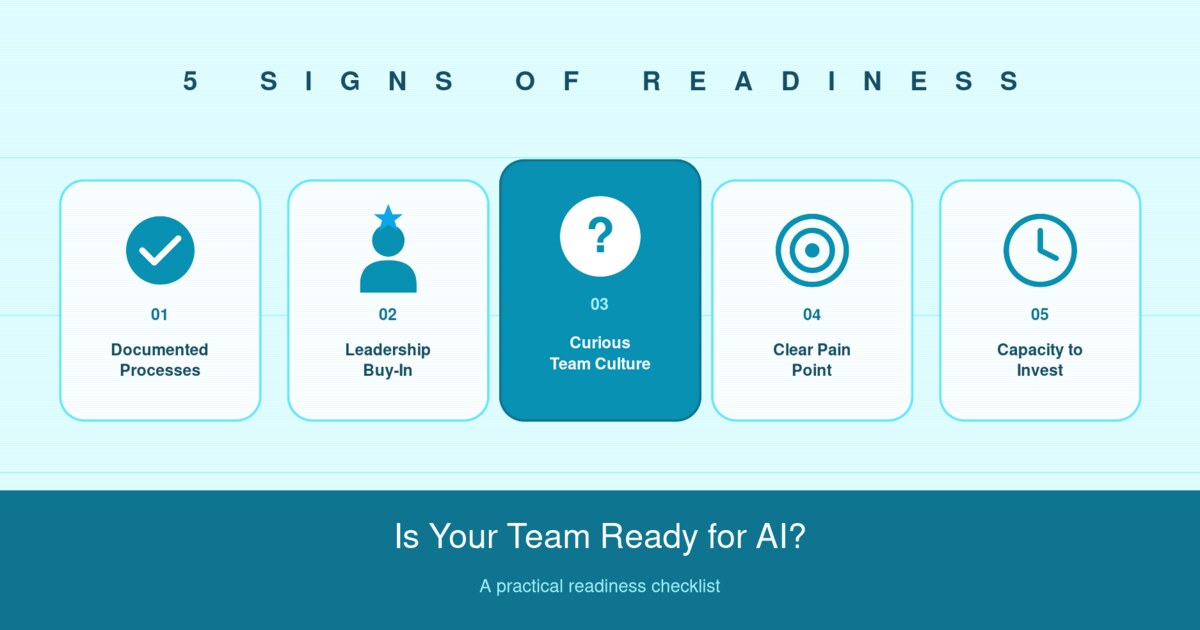
AI implementation readiness isn’t about having the latest technology or the biggest budget. It’s about having a team that’s prepared to partner with AI tools effectively. The difference between organizations that succeed with AI and those that struggle often comes down to timing and team readiness, a theme we explore more deeply in the 90-day AI adoption timeline and our AI adoption playbook.
How do you know your team is ready for AI?
Look for documented processes (informal is fine), leadership framing AI as partnership, culture that asks “how can we do this better?”, clear success metrics, and 10 to 15% capacity for learning during the pilot. Red flags: active resistance to tools, leadership driven by headcount reduction, no quality standards for current work.
After working with dozens of organizations on their first AI implementations, we’ve identified clear patterns that predict success or failure. Here are the specific signs that indicate your team is ready to move forward, and the warning signals that suggest you should address some fundamentals first.
Your Processes Are Documented (Even If They’re Not Perfect)
The strongest predictor of AI success isn’t perfect processes, it’s documented processes. When your team can explain how work currently gets done, they can identify where AI might amplify their efforts.
You don’t need enterprise-grade documentation. Simple workflows, basic checklists, or even informal “how we do things” guides are sufficient. The key is that knowledge isn’t trapped in individual heads.
Teams that struggle with AI implementation often discover they’re trying to automate or augment work that isn’t clearly defined. You can’t effectively partner with AI if you can’t articulate what the human side of the partnership looks like.
What Good Process Documentation Looks Like
Effective process documentation for AI readiness includes:
- Clear inputs and outputs for each major workflow
- Identified decision points where human judgment is required
- Basic quality standards or success criteria
- Understanding of how different roles interact in the process
If your team can walk through these elements for their key workflows, you’re in good shape to explore AI augmentation.
Leadership Speaks About Partnership, Not Replacement
The language your leadership uses when discussing AI reveals everything about readiness. Leaders who talk about “augmenting capabilities” and “amplifying expertise” are setting their teams up for success. Those who focus on cost reduction through headcount elimination are creating resistance before they even begin.
Ready organizations have leadership that understands the partnership model. They see AI as a way to help their people do more valuable work, not as a way to do the same work with fewer people.
This mindset difference shows up in budget conversations, project planning, and how leaders respond to employee questions about AI. When leadership consistently frames AI as a tool that makes the team more effective, implementation becomes collaborative rather than defensive.
Your Team Asks “How Can We Do This Better?” Regularly
The most AI-ready teams are naturally curious about improvement. They’re the ones who already suggest process tweaks, ask about new tools, or wonder if there’s a more efficient way to handle routine tasks.
This curiosity indicates a growth mindset that’s essential for AI adoption. Teams that regularly look for better ways to work are prepared to experiment, iterate, and learn alongside AI tools.
Conversely, teams that resist any change to current processes will struggle with AI implementation. The technology itself isn’t the barrier, it’s the organizational culture around change and improvement.
You Have Clear Success Metrics for Current Work
Ready organizations can answer the question: “How do you know when you’re doing good work?” They have metrics, standards, or clear outcomes that define success in their key processes.
These don’t need to be sophisticated analytics. Simple measures like turnaround time, quality checklists, or client satisfaction indicators work well. The important thing is that your team understands what good performance looks like.
Clear success metrics make it possible to measure whether AI is actually improving outcomes. Without them, you’re implementing technology without knowing if it’s helping.
Someone Has Time to Learn and Iterate
Successful AI implementation requires dedicated attention, especially in the early phases. Ready organizations have identified specific people who can invest time in learning new tools, testing approaches, and refining processes.
This doesn’t mean hiring additional staff. It means being realistic about the learning curve and ensuring that key team members aren’t already stretched to capacity.
The most successful implementations we’ve seen dedicate 10-15% of someone’s time to AI learning and iteration during the first 90 days, a cadence we map out in our 90-day AI adoption timeline. Organizations that try to squeeze AI adoption into already-full schedules struggle with effective adoption.
What are the signs a team is NOT ready for AI implementation?
Three red flags: active resistance to tools signals organizational dynamics AI will amplify; leadership viewing AI as headcount reduction creates distrust; no quality standards means you can’t measure AI’s impact. Address change management fundamentals, reframe vision around partnership, and establish basic metrics before proceeding.
Active Resistance to Any New Tools
If your team pushes back on basic productivity tools or process improvements, they’re not ready for AI. Address the underlying change management fundamentals for AI adoption first.
AI implementation amplifies existing organizational dynamics. Teams that resist change will resist AI, regardless of its potential benefits.
Leadership Views AI as Pure Cost Reduction
When leaders are primarily motivated by reducing headcount, AI implementation becomes a trust issue rather than a productivity opportunity. This creates resistance that undermines even the best technical implementation.
Address the strategic vision for AI before investing in tools or training.
No Clear Picture of Current Work Quality
Without understanding what good work looks like currently, you can’t determine whether AI is improving or degrading outcomes. Establish basic quality measures before adding AI complexity.
What needs to be in place before starting an AI project?
Core readiness requirements: documented processes showing current workflows, leadership committed to partnership framing not cost-cutting, team culture that asks improvement questions, clear success metrics for current work, dedicated capacity (10-15%) during pilot phase. Less critical but helpful: existing comfort with tool adoption, executive sponsorship, basic AI literacy.
Most organizations don’t need to check every box before starting with AI. But having more green flags than red ones significantly improves your chances of successful implementation.
The key insight is that team readiness matters more than technology readiness. Organizations with prepared teams can successfully adopt simpler AI tools, while unprepared teams struggle even with sophisticated technology.
If you’re seeing mostly positive signs, consider starting with a small pilot project focused on augmenting one specific workflow, our guide to building your first AI agent walks through exactly how to scope that. If you’re seeing warning signs, address the people and process fundamentals with a people-first AI strategy first.
The organizations that succeed with AI are those that recognize it as a partnership between human expertise and technological capability. When your team is ready for that partnership, the technology implementation becomes much more straightforward.
Related reading: